Data Analysis
- Excel (for quantifying usability test results)
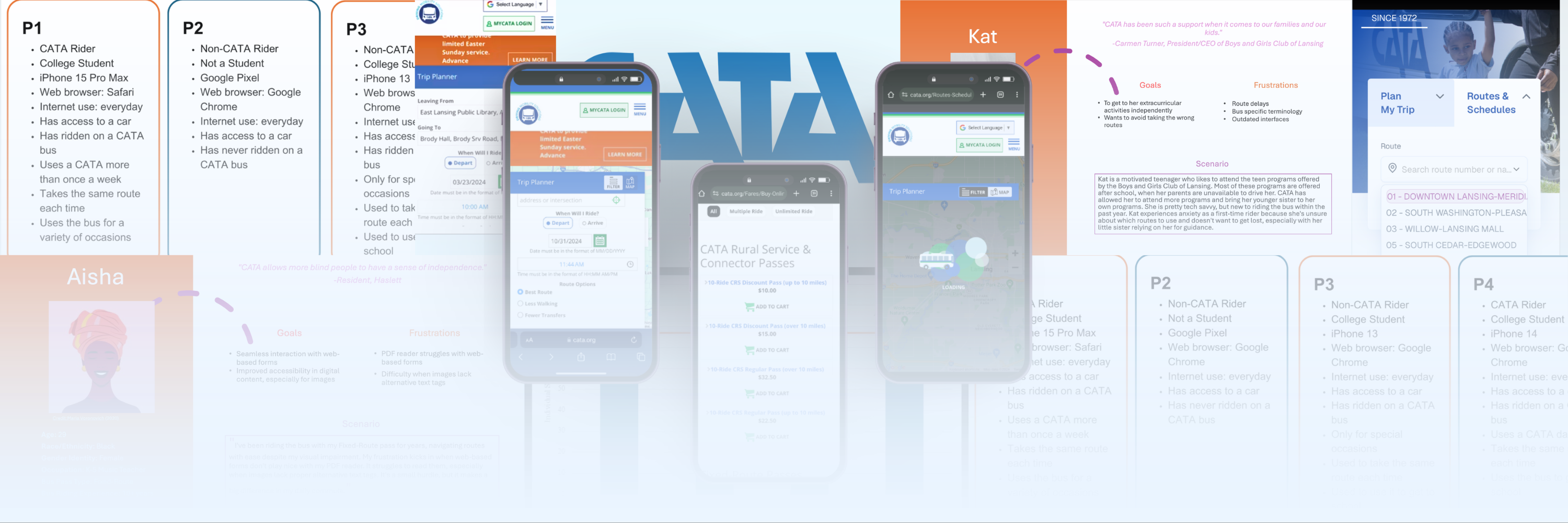
As part of the Michigan State University UX 820 Usability Evaluation course, my team conducted a comprehensive usability study of the Capital Area Transportation Authority (CATA) mobile website. This project involved the complete UX research process, including heuristic evaluation, user persona development, usability testing, data analysis, and presentation of findings to stakeholders. We followed a structured approach to evaluate the CATA mobile website, focusing on its core components: effectiveness, efficiency, and user satisfaction.
We began the project by conducting a heuristic evaluation, applying established usability principles (such as Nielsen’s 10 Usability Heuristics)
to identify potential usability issues within the site. This initial step allowed us to pinpoint broad usability concerns that needed further
exploration in usability testing.
To ensure that our research was aligned with the needs of CATA’s user base, we created user
personas representing
key target users (e.g. students, commuters, tourists, and people with disabilities). These personas helped to guide our
testing and ensure that we were evaluating the website from the perspective of typical CATA users.
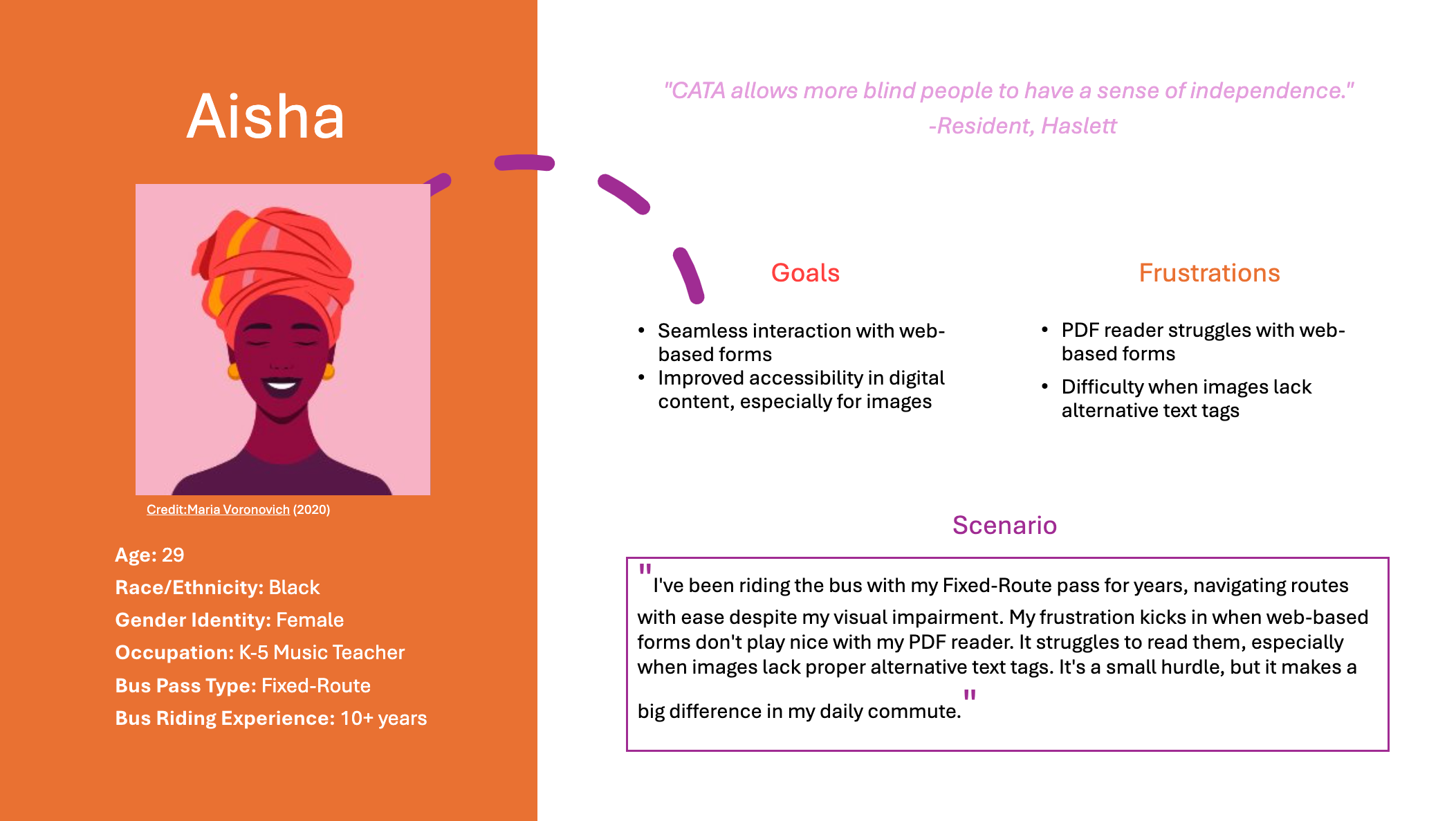
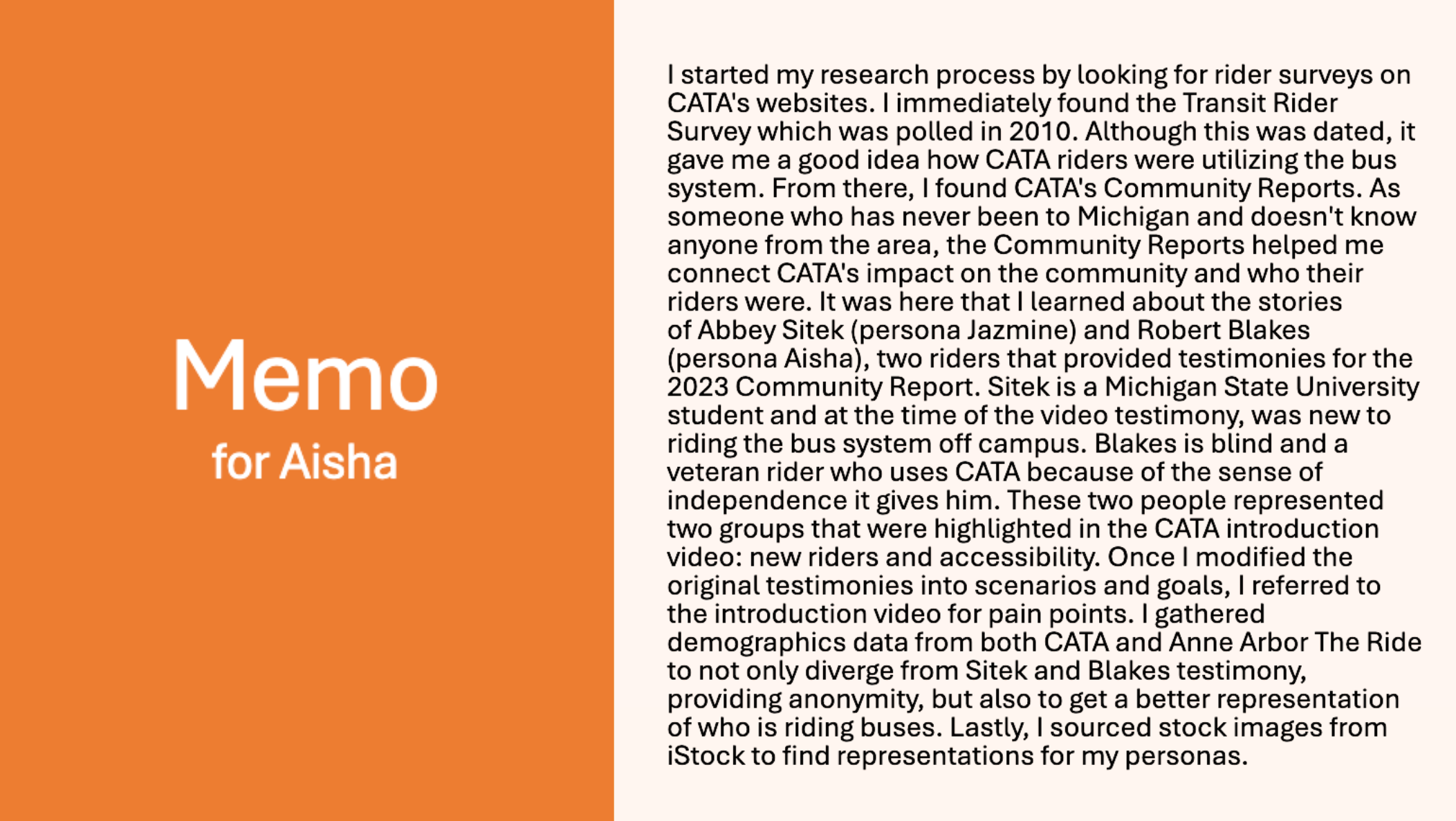
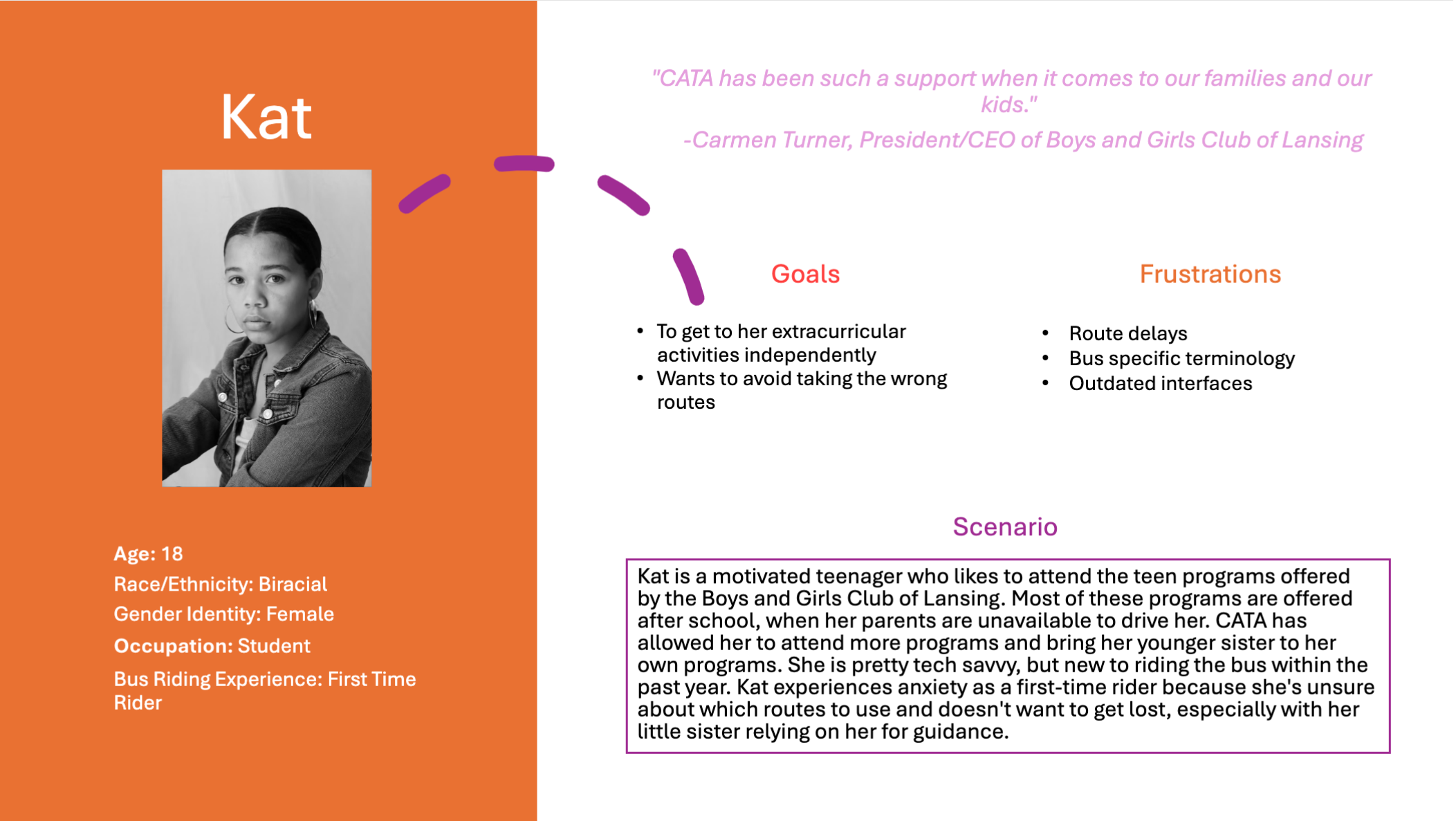
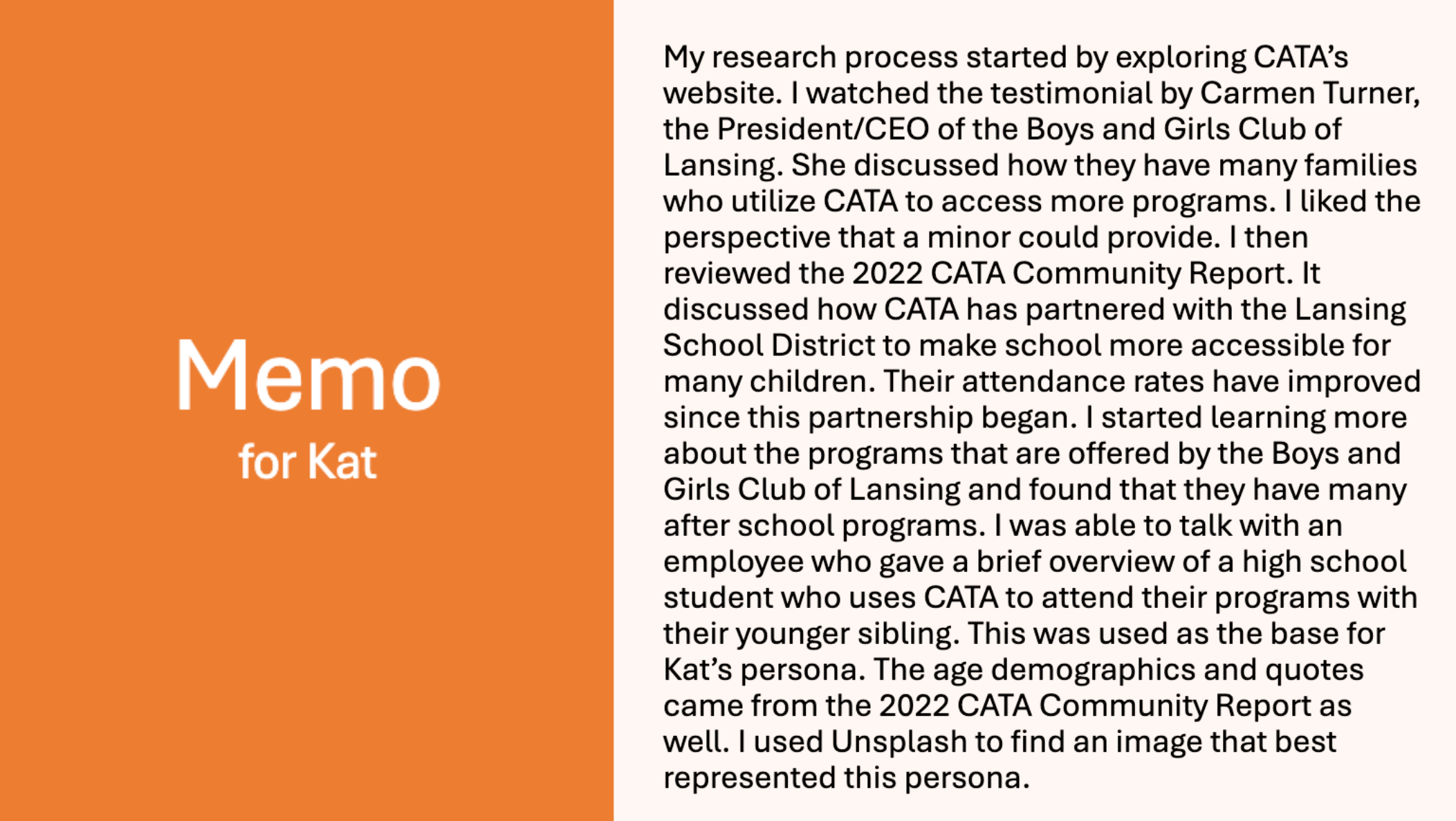
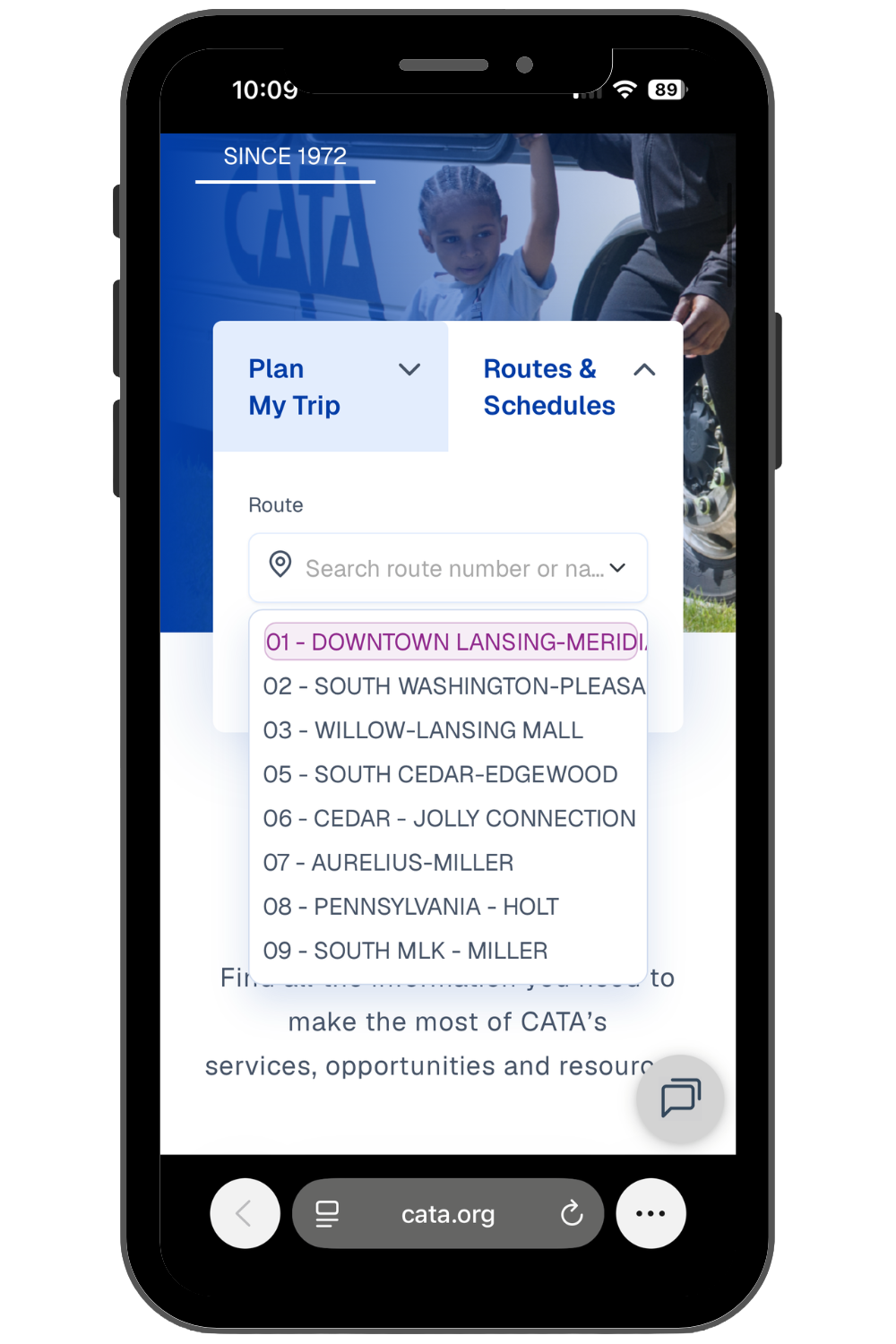
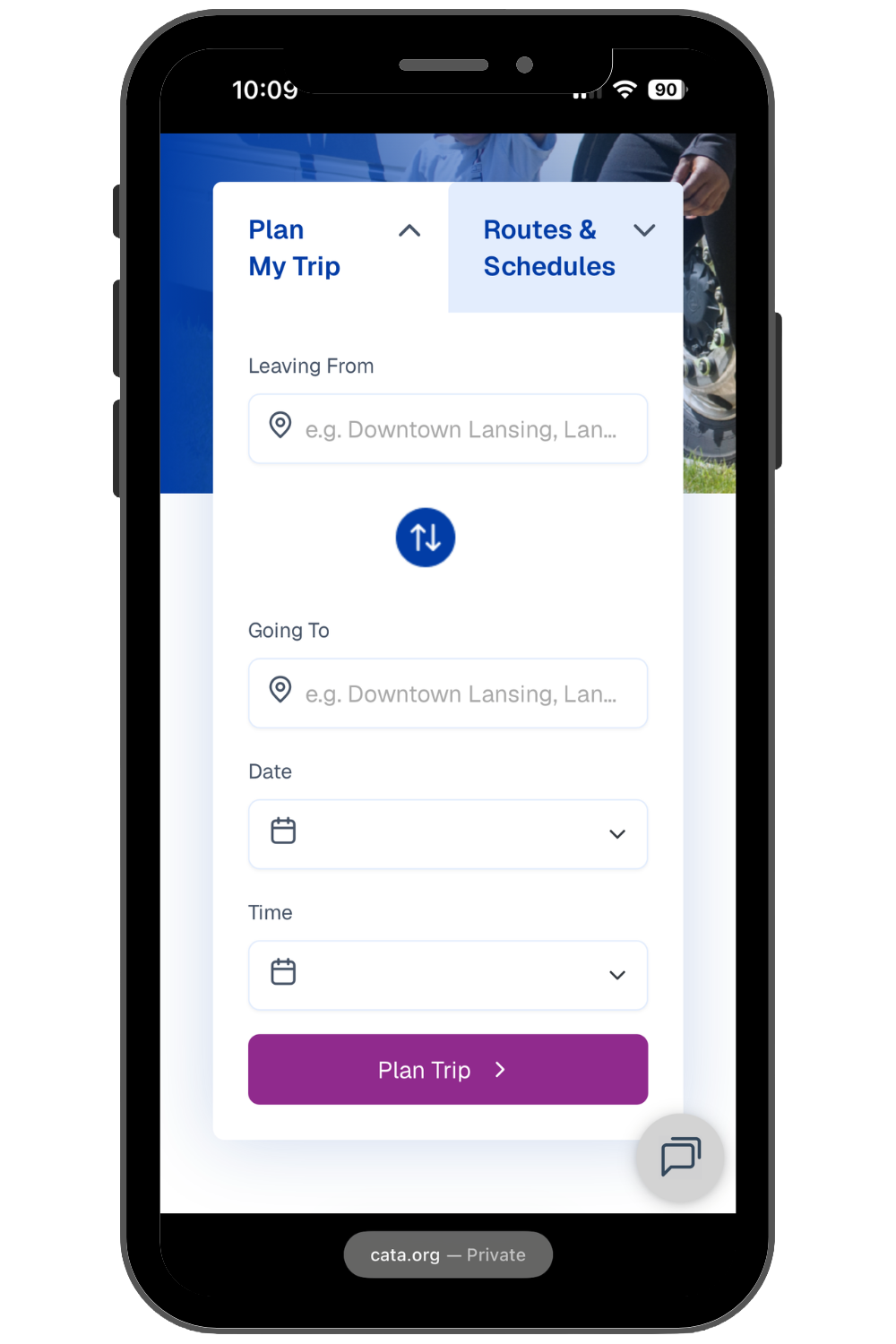
With our personas in mind, we developed a usability test plan, which included defining tasks for participants to complete on the CATA mobile website. These tasks were designed to test key functionalities of the website, including search, navigation, and address lookup features. Participants were selected and recruited based on criteria that reflected CATA’s real user demographics. Slide 2 shows screen shots of issues with the UI where banners and buttons overlapped and content was difficult to find.
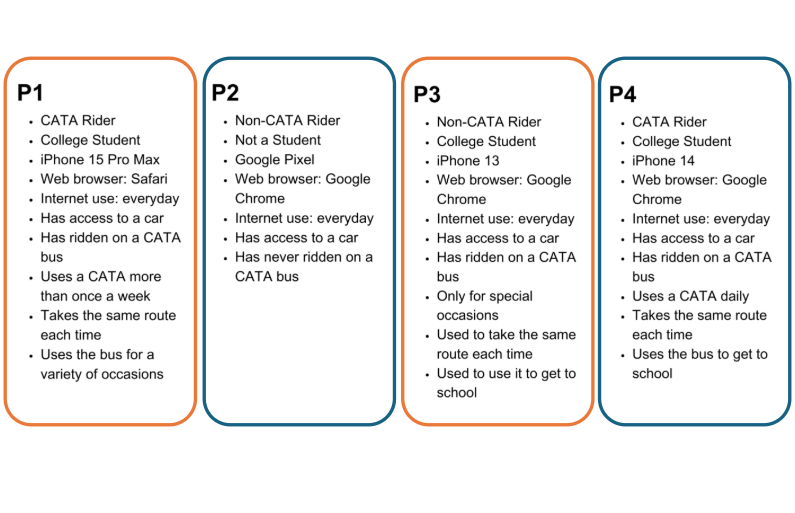
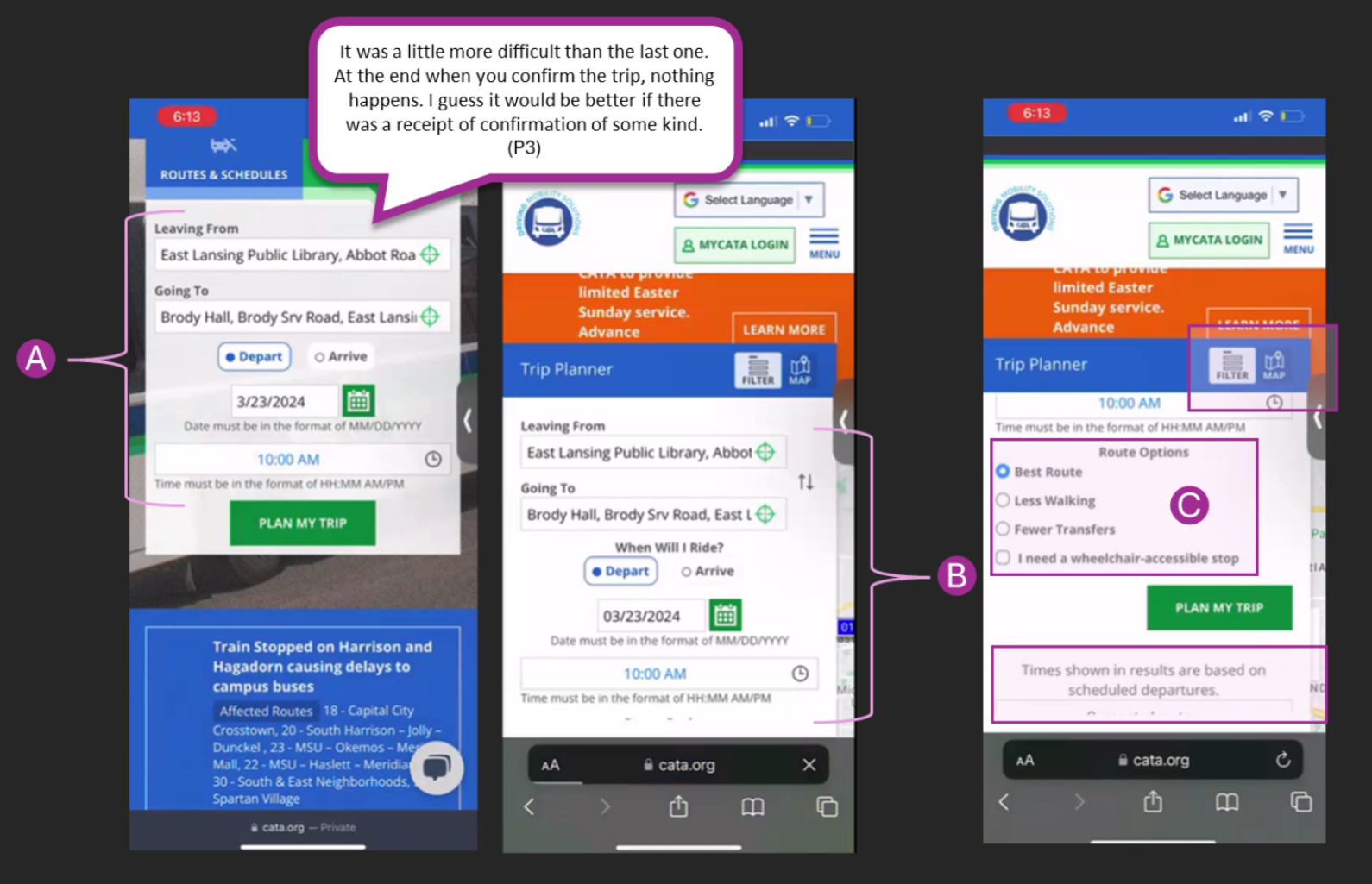
We conducted usability testing interviews, where participants were asked to perform tasks on the CATA website while we observed their actions. Throughout the testing process, we collected both quantitative data (such as task completion time) and qualitative data (user feedback, comments, and struggles during tasks).
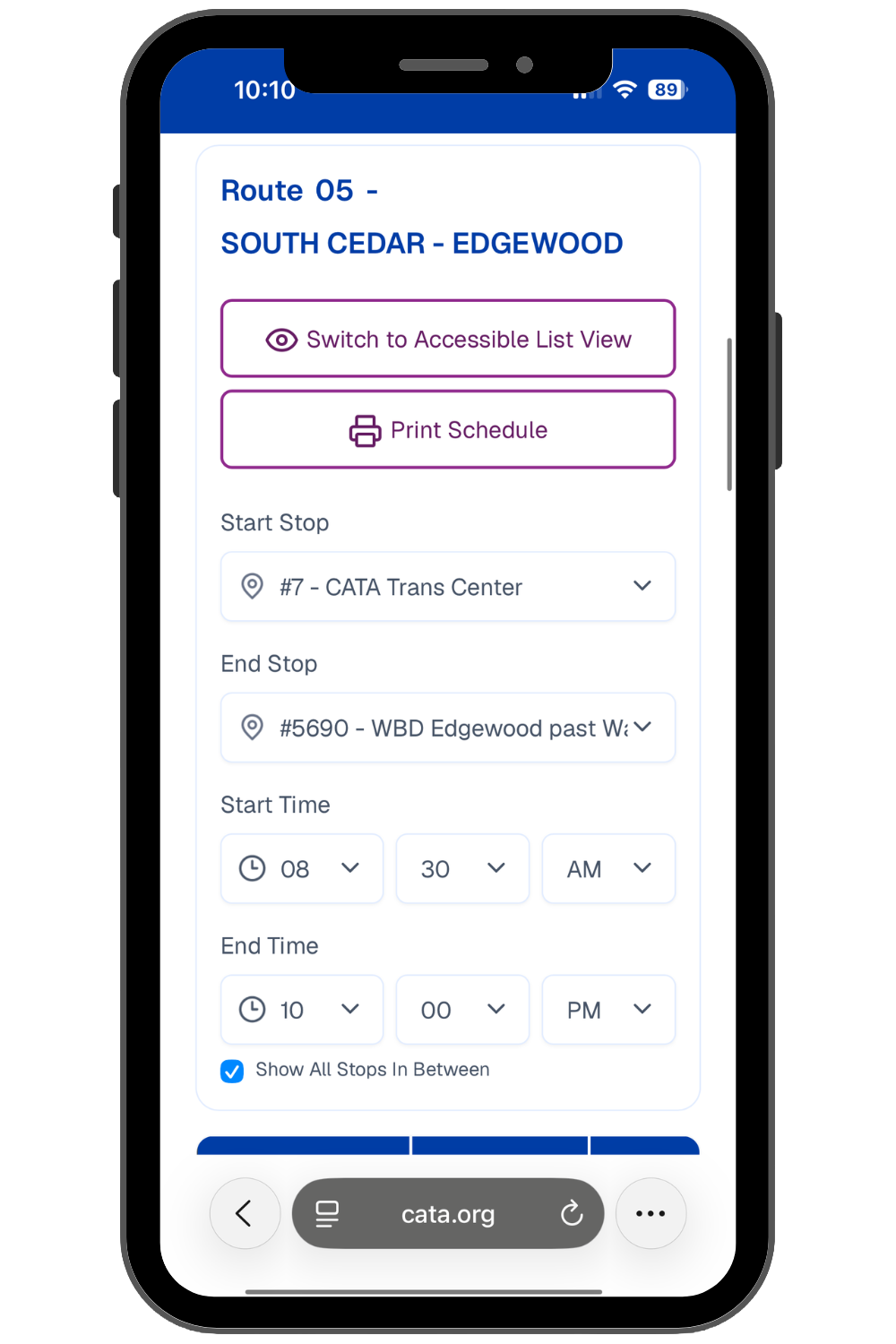
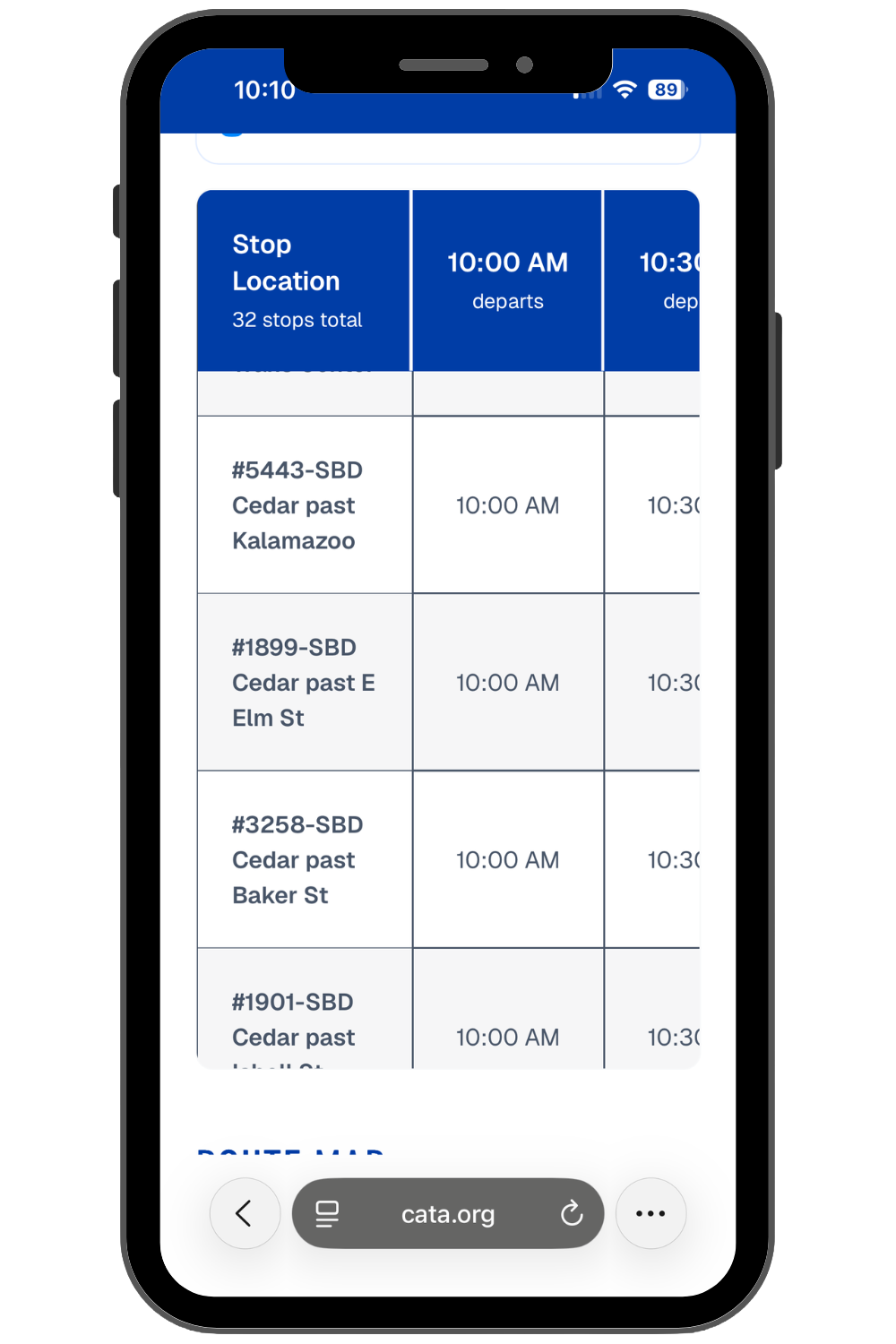
After gathering all data, we analyzed the results to identify key usability issues. We categorized these issues based on their impact on effectiveness, efficiency, and satisfaction, providing us with clear areas for improvement. We then prepared a comprehensive report, detailing our findings and presenting recommendations to CATA stakeholders. CATA retested with updated mockups based on the findings and redesigned the website accordingly. The new interface is pictured below.